AED
AED
For years, the Dubai investment conversation revolved around a familiar shortlist: Downtown Dubai, Dubai Marina, Business Bay, JVC. Each had its moment of being “the next big thing” before maturing into an established, higher priced district. Today, that same conversation increasingly has one name at the centre of it. Dubai South.
This isn’t hype chasing a trend. It’s capital following infrastructure, employment growth and a masterplan that’s now visibly under construction rather than sitting on a rendering. Here’s what’s actually driving the shift, and what it means for anyone weighing an investment in the area.
For a closer look at the community itself, including its districts, amenities and connectivity, read our full guide: Dubai South Community Area Guide.
The Airport Is the Whole Thesis
Every serious conversation about Dubai South starts in the same place: Al Maktoum International Airport (DWC). The AED 128 billion expansion approved for the airport’s new passenger terminal is designed to eventually handle 260 million passengers a year, with five runways and a cargo capacity of 12 million tonnes once fully built out. That scale isn’t incremental. It positions DWC as one of the largest airport projects in the world.
Airports don’t just move people. They generate entire economies around themselves: airline staff, ground handling and logistics firms, hospitality operators, warehousing and cargo businesses, retail, and a long tail of residents who want to live near where they work. Investors buying into Dubai South today are, in effect, buying early into that ecosystem, well before it’s fully formed and before pricing reflects its eventual scale.
The Numbers Are No Longer Speculative
What separates Dubai South’s 2026 story from a typical “emerging area” pitch is that the transaction data now backs it up. According to a recent market report from W Capital Real Estate Brokerage, Dubai South recorded nearly 2,900 real estate transactions worth AED 3.3 billion in June 2026 alone, making it Dubai’s best performing district for four consecutive months. Month on month transaction volumes rose 111%, with values up 106%, and the area has held a place among Dubai’s top five performing locations for eight straight months, driven largely by off plan activity.
This comes against the backdrop of a record year for Dubai’s property market broadly. The emirate recorded over 270,000 transactions worth more than AED 917 billion in 2025, a 20% year on year increase, with strong momentum carrying into the first quarter of 2026. Dubai South’s performance within that context isn’t just healthy. It’s disproportionately strong relative to a district still in its earlier growth phase.
A Real Economy, Not Just a Residential Bet
What makes Dubai South different from a purely residential growth story is the diversity of what’s actually happening on the ground. The district combines residential communities with commercial districts, logistics facilities and business parks, and sits close to Jebel Ali Port, the Jebel Ali Free Zone, and Expo City Dubai, giving it built in proximity to some of the region’s most important trade and logistics infrastructure.
That ecosystem is already attracting real corporate activity. Dubai South added 653 new companies over the past year, taking its total operating business base past 4,200, with a 90% business retention rate, a sign that companies are staying, not just registering and leaving. For residential investors, that matters directly: business growth is what eventually fills apartments with tenants.
Where Pricing and Yields Currently Sit
For investors weighing entry points, Dubai South’s current pricing still reflects its earlier stage status relative to established districts. Apartments and townhouses in the area are trading in the AED 950 to 1,600 per square foot range, with gross rental yields reported between 6.5% and 9%, figures that compare favourably to more mature, higher priced Dubai districts where yield compression has become more pronounced.
Dubai South is a designated freehold area, meaning non GCC nationals can buy on the same basis as they would in Dubai Marina or Downtown Dubai. Title is registered with the Dubai Land Department, and the standard 4% DLD transfer fee applies. As with any freehold purchase in Dubai, verifying title and project level documentation before committing remains essential. Dubai South’s growth narrative doesn’t remove the need for standard due diligence.
How Dubai South Compares to Dubai’s Established Districts
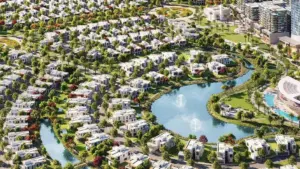
Dubai South shouldn’t be judged by the same yardstick as a mature, centrally located district, and doing so is where some investors misjudge the opportunity. Business Bay remains more central and easier to position for short term, city focused tenants. Dubai Marina carries a stronger, more established rental identity and waterfront prestige. Dubai Hills Estate is more premium and more established as a family district, at a higher price point. Dubai Creek Harbour offers a more finished, polished waterfront look today.
Dubai South’s positioning is different by design. It’s a future oriented growth corridor tied to the airport and southern expansion story, not a district competing for today’s prime location premium. Investors who compare it against central Dubai on today’s terms will see an “early” area. Investors who assess it against long term infrastructure logic and future positioning tend to see a considerably stronger case.
For a wider view of where luxury off plan investment is heading across the country, see our full roundup: The Most Luxurious UAE Off Plan Launches in 2027.
A Realistic Long Term Outlook
Most credible analysis of Dubai South frames it as a multi phase story rather than a quick flip. In the current phase, investors are largely positioning early based on infrastructure commitments and government planning, with project selection carrying outsized importance since the area’s identity is still forming. As more projects reach handover and the airport ecosystem matures, rental demand and population density are expected to strengthen, giving the district a more lived in, established character. Longer term projections point toward Dubai South maturing into a recognised residential and business hub over the coming decade, alongside Dubai’s broader 2040 Urban Master Plan and its D33 economic agenda goal of doubling the size of the economy by 2033.
That timeline matters. Dubai South is not positioned as a district for investors chasing immediate rental prestige or short cycle flips. It rewards patience, careful project selection, and realistic expectations about where the area sits in its growth curve today.
Who Dubai South Actually Suits
Based on current market conditions, Dubai South tends to make the most sense for:
- Long term, growth oriented investors comfortable entering a district before it reaches full maturity, in exchange for stronger relative value today.
- Yield focused buyers looking for gross returns above what most established Dubai districts currently offer.
- Investors building a diversified Dubai portfolio, using Dubai South as a growth allocation alongside more established, income stable holdings elsewhere in the city.
- Buyers connected to aviation, logistics, or trade sectors, who understand the ecosystem forming around DWC and Jebel Ali firsthand.
It’s a less natural fit for investors who need immediate rental comparables, an established resale market, or the short term liquidity that comes with a fully mature district.
The Vetra View
Dubai South’s momentum in 2026 isn’t built on a single announcement or a marketing push. It’s built on an airport expansion that’s under construction, transaction volumes that are already outperforming most of Dubai, and a business base that’s growing and staying put. That combination is rare for a district still this early in its lifecycle.
The opportunity here isn’t about timing a quick exit. It’s about recognising a growth corridor while entry pricing still reflects an earlier stage of the story, and backing it with the same discipline any serious Dubai investment deserves: verified title, credible developer track record, and a clear eyed view of where the district sits on its own timeline.
For investors thinking in decades rather than quarters, Dubai South is shaping up to be one of the more compelling conversations in Dubai real estate right now.