AED
AED
Signing a tenancy contract in Dubai often raises one simple question. Does this rent cover everything, or are there extra costs waiting down the line. The answer depends on the building, the landlord, and the type of property, but there are patterns every tenant should know before they sign.
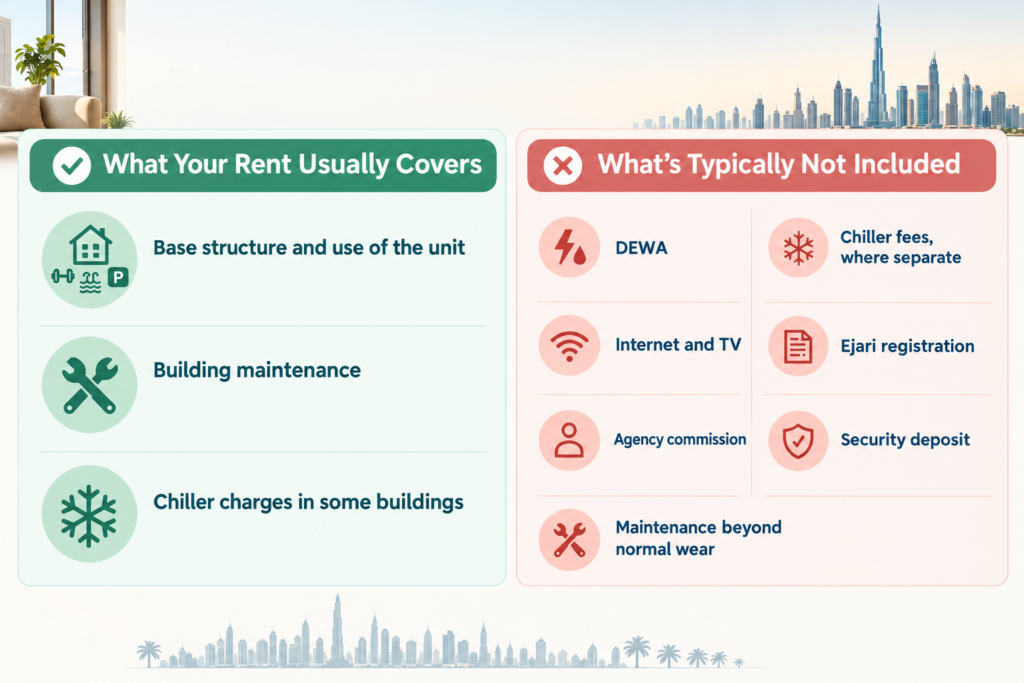
What your rent usually covers
Base structure and use of the unit
Your monthly or annual rent covers the unit itself and, in most buildings, access to shared amenities such as the gym, pool, and parking, if these are part of the building’s standard offering. Shared facility maintenance is typically bundled into the service charge paid by the landlord or owner, not billed separately to the tenant.
Building maintenance
Structural repairs, common area upkeep, and building management are generally the landlord’s responsibility unless the contract states otherwise. This includes things like elevator servicing, building security, and general upkeep of shared spaces.
Chiller charges in some buildings
Certain developments, particularly older buildings or specific master communities, include chiller charges within the rent or as a fixed annual fee bundled with the tenancy. This varies significantly by building, so it is worth confirming directly rather than assuming.
What’s typically not included
DEWA
Dubai Electricity and Water Authority charges are almost always the tenant’s responsibility. This includes setting up your own DEWA account, paying the connection deposit, and covering monthly consumption.
Chiller fees, where separate
In buildings where chiller charges are not bundled into rent, tenants pay a separate cooling provider such as Empower or Tabreed. These charges can be substantial in summer months and are worth asking about before signing.
Internet and TV
Connectivity is set up and paid for independently by the tenant, usually through Etisalat or du.
Ejari registration
Ejari registration is a mandatory step for any Dubai tenancy and comes with its own fee, typically paid by the tenant unless negotiated otherwise.
Agency commission
If you rent through a broker, the standard commission is five percent of the annual rent, paid by the tenant, plus five percent VAT on that commission.
Security deposit
A refundable deposit is standard practice, usually five percent of annual rent for unfurnished units and ten percent for furnished ones. This is separate from rent and returned at the end of the tenancy, minus any deductions for damage.
Maintenance beyond normal wear
While structural maintenance sits with the landlord, tenants are usually responsible for minor upkeep and any damage caused during their tenancy.
Furnished versus unfurnished
Furnished units come with appliances and furniture included in the rent, while unfurnished units require tenants to fit out the space themselves. Semi-furnished is also common, typically covering kitchen appliances and built-in wardrobes but not furniture.
A quick pre-signing checklist
Before signing, it is worth confirming directly with the landlord or agent:
- Is the chiller charge included or billed separately
- What amenities are covered under the service charge
- What is the exact deposit amount and its terms for return
- Who registers the Ejari and who pays for it
- What condition the unit is handed over in, and what is documented
The Vetra View
Rent in Dubai rarely tells the whole story on its own. The headline figure covers the unit, but utilities, cooling, registration, and commission all sit outside it and can add a meaningful amount to your first year of costs. Tenants who ask the right questions upfront, particularly around chiller billing and what the service charge actually covers, avoid the most common surprises. A transparent conversation with your landlord or agent before signing is worth more than any clause buried in the fine print.