
 AED
AED
$ USD
€ EUR
£ GBP
AED
Dubai’s Established Family Neighbourhood.
Mirdif is one of Dubai’s most established and consistently popular family neighbourhoods, a genuinely suburban, low-rise community covering approximately 9 square kilometres in the emirate’s north, close to Dubai International Airport. Unlike much of Dubai’s newer development, Mirdif has grown organically since the 1990s, and it remains one of the few areas in the city with no skyscrapers, hotels, or tourist attractions, a neighbourhood that feels genuinely residential rather than built for spectacle.
The community is organised into several distinct sub-communities: Ghoroob and Shorooq, both low-rise leasehold developments popular with long-term expatriate renters, Uptown Mirdif, a gated, English spa-town-inspired enclave of villas and apartments, and Mirdif Hills, the area’s principal freehold development, a AED 3 billion mixed-use masterplan bringing modern apartments, duplexes, a hotel, and a hospital to Mirdif’s northern edge alongside Mushrif Park. Mirdif Tulip, a newer arrival, was the first development in the area to introduce freehold apartment ownership.
Ownership across Mirdif is genuinely mixed, and buyers should treat this as an essential first question: the community is not a full freehold zone, with most traditional villas in Ghoroob and Shorooq remaining leasehold and historically dominated by Emirati and GCC owners, while Mirdif Hills and Mirdif Tulip offer freehold title open to foreign buyers. This layered ownership structure reflects Mirdif’s organic, decades-long growth rather than a single master-developer’s unified plan.
For residents, Mirdif’s appeal has remained remarkably consistent for more than two decades: spacious villas with private gardens, genuinely quiet, low-traffic streets, easy access to Mushrif Park’s 1,300 acres of green space, and Mirdif City Centre’s 465 shops anchoring a self-contained lifestyle. For buyers, the area offers steady, if unspectacular, rental yields, typically 4.6% to 6%, alongside strong, sustained demand from families who value long-term stability over quick capital appreciation.
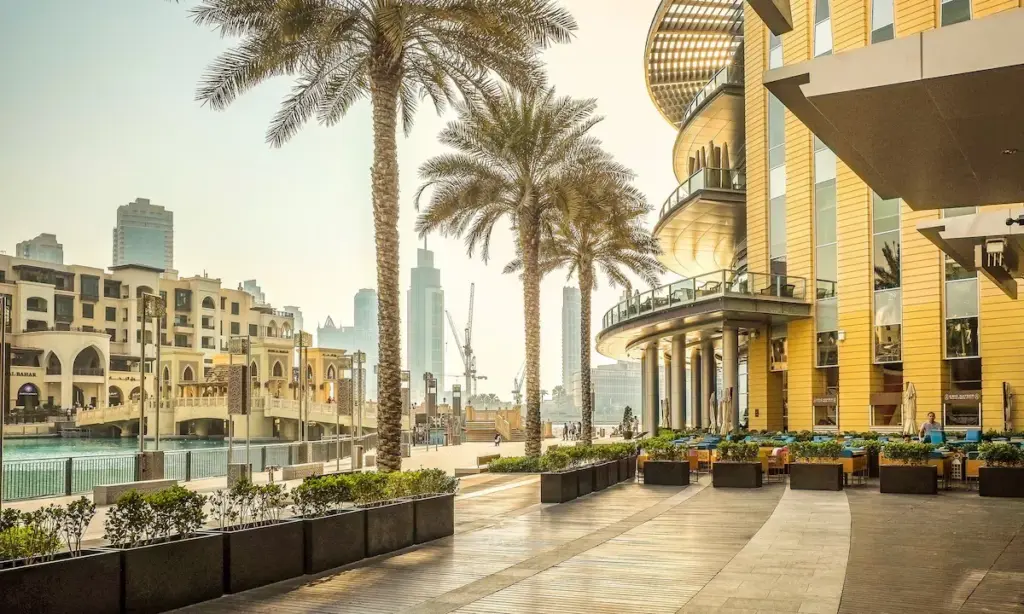
Mirdif sits along Al Khawaneej Street, bordered by Sheikh Mohammed Bin Zayed Road (E311), in the north-east of Dubai close to Dubai International Airport. This position gives residents a straightforward, roughly 10 to 12-minute run to the airport and a genuinely fast connection to Dubai Festival City, Al Rashidiya, and the wider Dubai Creek corridor.
Mirdif’s everyday amenity base is genuinely comprehensive, anchored by Mirdif City Centre and supplemented by supermarkets, clinics, nurseries, and schools distributed close to nearly every residential cluster in the community.
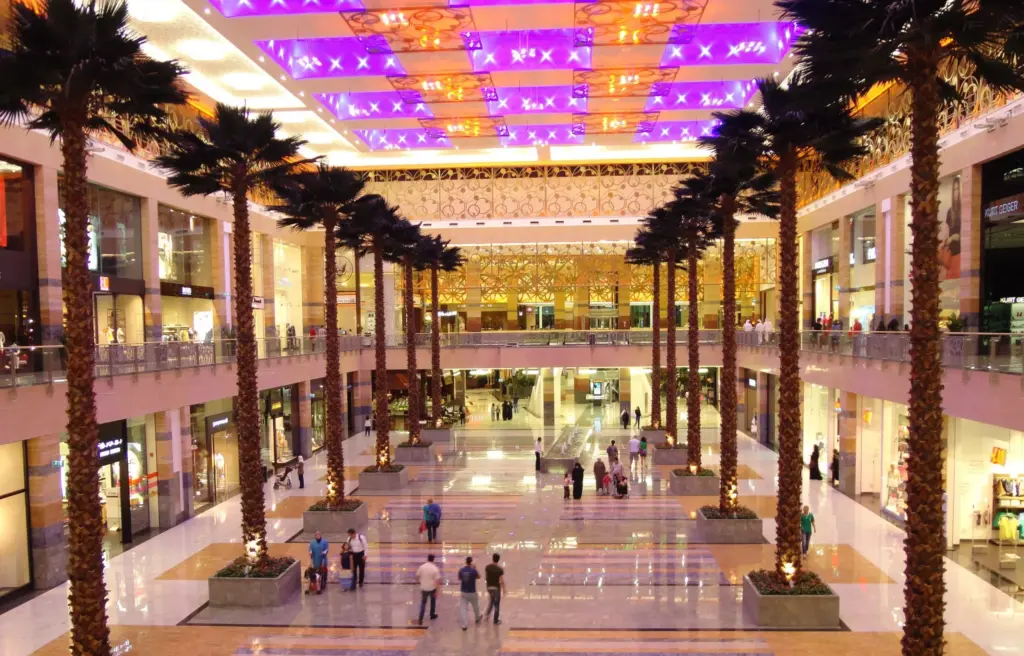

• Mirdif City Centre — opened in 2010, this 465-shop mall anchors Mirdif's retail and entertainment scene, with VOX Cinemas, Magic Planet, and iFLY Dubai alongside fashion, home, and lifestyle retailers.
• Uptown Mirdif Mall — 150+ shops and eateries with outdoor seating, offering everything from organic produce to handmade crafts within Uptown Mirdif itself.
• Further Malls and Retail — Mirdif Hills Avenue, Park Centre Mirdif, Mirdif 35, Abaya Mall, and Golden Gate Shopping Centre round out the community's genuinely wide retail and dining offer.

• Mirdif Hills Hospital — a 230-bed hospital included within the Mirdif Hills masterplan, giving the community genuine, on-site access to advanced medical care.
• Uptown Mirdif Healthcare Centre — Uptown Mirdif's own healthcare centre serves residents directly within the gated community.
• Community Clinics — further clinics, pharmacies, and nurseries are close to most residential clusters across Ghoroob, Shorooq, and the wider community.

• Mushrif Park — spanning approximately 1,300 acres, one of Dubai's largest urban forests and green spaces, offering walking trails, an amphitheatre, adventure zones, and abundant shade, immediately adjacent to the community.
• Bark Park — a dedicated dog park, alongside Mirdif Park, giving pet owners genuine, purpose-built outdoor space.
• Shorooq Clubhouse, Pools and Tennis Courts — Shorooq's community clubhouse includes pools and tennis courts alongside its villa clusters.
Mirdif’s character has been built gradually, and genuinely, since the 1990s, and that organic growth shows in the area’s texture: villas built individually or in small clusters by different developers over the years, each with its own facade and layout rather than a single repeated template. Residents consistently describe Mirdif as one of the few Dubai neighbourhoods that feels like a genuine retreat from the city’s pace, quiet streets where children bike and residents jog, without skyscrapers, hotels, or tourist attractions competing for space.
The community’s population, over 35,000 residents spanning Emiratis, Europeans, South Asians, and Arabs, gives Mirdif a genuinely diverse, settled social fabric that has developed over decades rather than a single masterplan cycle. Community events, Ramadan and Eid celebrations, National Day festivities, back-to-school gatherings, and sports festivals, are a regular part of life, particularly within Uptown Mirdif’s more structured, gated setting.
Mirdif’s four principal sub-communities each carry a distinct identity: Ghoroob’s affordable, low-rise apartments draw young professionals and small families; Shorooq’s larger villas, clustered around a private clubhouse next to Mushrif Park, suit families wanting more space; Uptown Mirdif’s spa-town design and self-contained amenities appeal to those wanting a fully managed, gated environment; and Mirdif Hills brings a genuinely new, freehold dimension to the area, positioned directly against Mushrif Park with hotel-grade amenities.
Buyers and tenants should be aware of two practical trade-offs consistently noted by residents: Mirdif’s proximity to Dubai International Airport means aircraft noise is occasionally audible, particularly in Uptown Mirdif, and because most of the community’s villas were built individually over many years rather than to a single specification, condition and finish vary considerably from property to property, making in-person viewings genuinely important.
Lifestyle Highlights:
The established villa and low-rise community bordering Mirdif, sharing a similarly suburban, family-oriented character and school catchment.
The residential district approximately 10 to 12 minutes away, offering further metro connectivity and proximity to Dubai Creek and Dubai Festival City.
The established waterfront community on Dubai Creek approximately 12 to 15 minutes away, offering Festival City Mall, IKEA, and creek-side dining, a popular destination for Mirdif residents.
The integrated technology free zone and residential community approximately 12 to 15 minutes away, home to over 1,000 technology companies and two on-campus universities.
The affordable, country-themed freehold community approximately 15 minutes away, offering a comparison point for buyers weighing Mirdif’s suburban villa character against a more compact, apartment-focused alternative.
The mixed-use district home to the Meydan Racecourse, within reach of Mirdif and offering a further villa community comparison point in Dubai’s eastern corridor.
Landmarks and Culture:
Nature and Outdoor:
Sport and Entertainment:
Shopping and Dining:
Mirdif is one of Dubai’s most consistently recommended family communities, with a genuinely strong schooling catchment spanning British, American, and international curricula, all within or close to the neighbourhood’s residential clusters.
Schools:
Nurseries:
Family Amenities:
What You’ll Find:
Mirdif’s property market spans a genuinely wide range across its leasehold and freehold sub-communities. Apartment sale prices start from approximately AED 1,200,000, with luxury units reaching up to AED 3,400,000; within Mirdif Hills specifically, studio to 3-bedroom apartments range from AED 781,000 to AED 1,560,000, and Mirdif Tulip offers a more accessible studio and 2-bedroom entry point from AED 553,000 to AED 1,500,000. Villas with 3 to 5 bedrooms sell for an average of AED 2,600,000 to AED 3,900,000, with maximum prices considerably higher for the largest, best-located homes.
Rental pricing reflects the area’s mature, established character: 4-bedroom villas in sought-after subdivisions typically renew between AED 152,000 and AED 170,000 annually, while 3-bedroom units generally rent from AED 130,000 to AED 180,000. Reported gross rental yields sit at approximately 5.6% for studios, 4.6% for 2 and 3-bedroom apartments, and up to 6% for 5-bedroom villas and Mirdif Hills and Mirdif Tulip stock specifically.
Market Insight:
Mirdif’s investment case rests on genuine, sustained demand rather than speculative growth: a community with more than three decades of established residential history, a large and stable population of long-term family tenants, and steady price growth, apartment prices in the wider area rose approximately 2.3% over the six months to October 2025. For buyers prioritising long-term stability, strong schooling access, and dependable rental demand over rapid capital appreciation, Mirdif remains one of Dubai’s most consistently reliable family-oriented investments, with Mirdif Hills and Mirdif Tulip offering the clearest freehold entry points into that stability.
Location: North-eastern Dubai, along Al Khawaneej Street, bordering Sheikh Mohammed Bin Zayed Road Total Area: Approximately 9 square kilometres Population: 35,000+ residents Key Sub-Communities: Ghoroob, Shorooq, Uptown Mirdif, Mirdif Hills, Mirdif Tulip Ownership: Mixed — primarily leasehold in Ghoroob/Shorooq; freehold in Mirdif Hills and Mirdif Tulip Mirdif Hills Investment: AED 3 billion; 3.9 million sq ft; 1,054+ units, hotel, and 230-bed hospital Metro Access: Mirdif Metro Station, Red Line Dubai International Airport: Approximately 10–12 minutes Gross Rental Yields: Approximately 4.6% to 6% |
Mirdif asks buyers to value genuine, decades-tested stability over the promise of a newer masterplan: a community that has quietly delivered on its family-first, suburban character since the 1990s, anchored by Mushrif Park’s 1,300 acres of green space and Mirdif City Centre’s genuinely complete retail and entertainment offer. It rewards those who understand that steady, dependable demand from long-term family tenants is worth more, over time, than the promise of rapid appreciation elsewhere.
The case is straightforward. Immediate proximity to one of Dubai’s largest urban parks. A genuinely complete, self-contained lifestyle anchored by Mirdif City Centre and Uptown Mirdif Mall. Fast, affordable access to Dubai International Airport, and a dedicated Red Line metro station. And, with Mirdif Hills and Mirdif Tulip, a relatively recent but genuine freehold entry point for international buyers into one of Dubai’s most established family neighbourhoods.
At Vetra, we track Mirdif sub-community by sub-community. We know which streets in Shorooq and Uptown Mirdif command the strongest long-term rental demand, which Mirdif Hills and Mirdif Tulip units offer the best freehold value, and how to navigate the ownership structures that vary across the community’s leasehold and freehold stock. Whether you are a family seeking genuine villa space and a walk to Mushrif Park, a tenant prioritising schools and long-term stability, or an investor exploring Mirdif’s freehold developments, Vetra brings the expertise and honest guidance to help you make the right decision in Mirdif.
Contact Vetra’s experts for tailored guidance and listings.
Do you need a property valuation?
Contact Vetra today and let us help you navigate Mirdif with clarity and structure.